


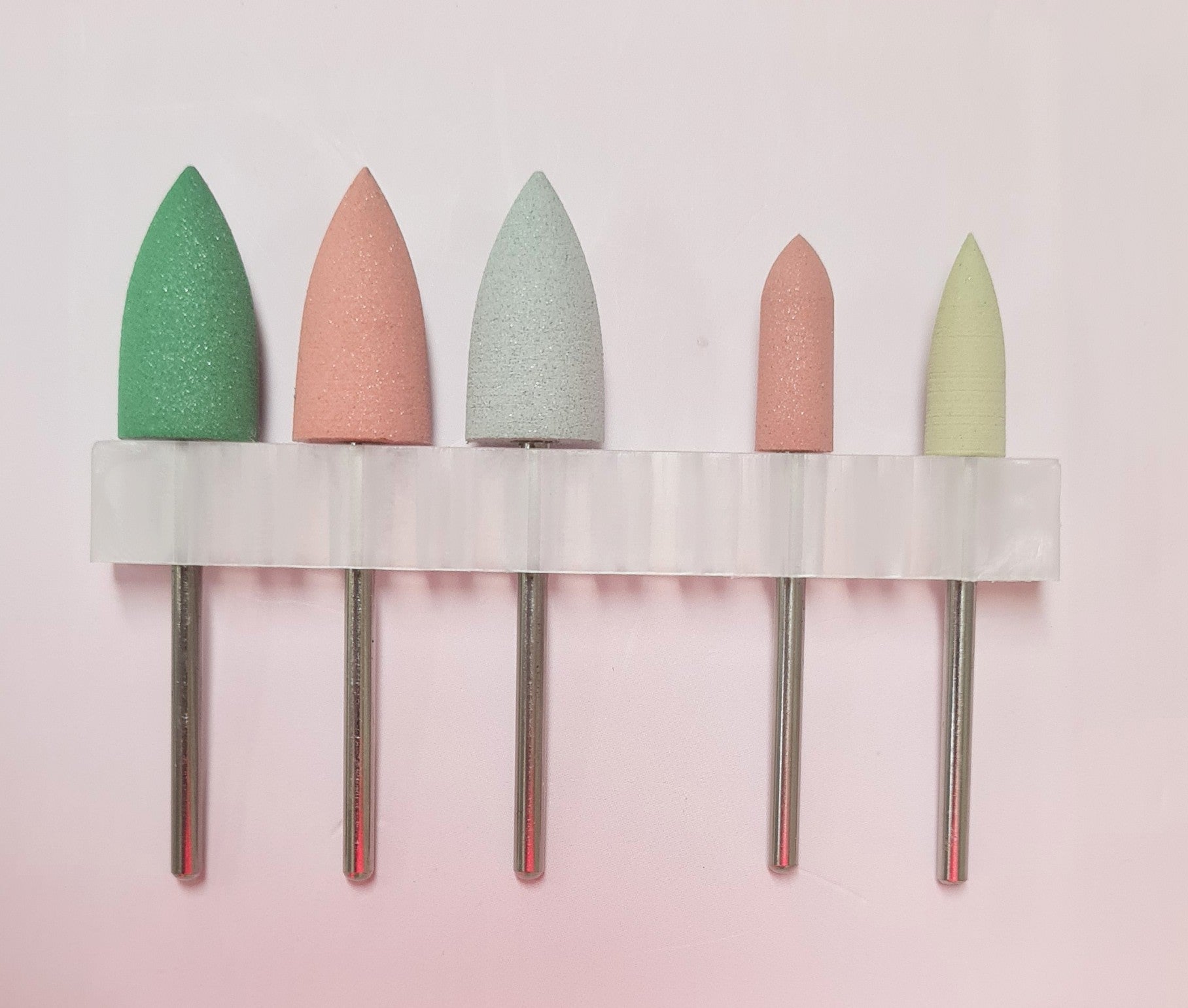
POL-5PC
Polisher drill bits for E-file manicure, 5 pcs
Couldn't load pickup availability
Pickup available at room b/433 South Road
Usually ready in 24 hoursFive-piece silicone polishing bit set giving a full finishing workflow from initial smoothing through to a high-gloss buff.
Key Features
- Five graded polishers — covers every stage of the finishing sequence.
- Silicone material — heat-free contact that protects the nail surface.
- Bundle saving — better value than five individual purchases.
- Washable and disinfectable — salon-standard hygiene across the set.
Ideal For
Nail technicians who want a complete polishing kit for manicure finishing in one purchase.
Free shipping on orders over $249
Official STALEKS Partner
Australian Consumer Guarantee applies
Ships within 1-2 business days
Polisher drill bits for E-file manicure, 5 pcs
If you have any questions, you are always welcome to contact us. We’ll get back to you as soon as possible, within 24 hours on weekdays.
-
Shipping
We ship Australia-wide from Bentleigh, VIC. Orders are dispatched within 1–2 business days. Standard delivery takes 3–7 business days depending on your location. Free shipping on orders over $249.
-
Customer Support
Have a question about this product? Email us at contact@beautytools.au and we’ll get back to you within 24 hours on business days.
-
Returns
Returns and refunds are handled in accordance with Australian Consumer Law. If your product arrives faulty or damaged, contact us and we will arrange a replacement or refund.
-
Authenticity Guarantee
We are an authorised Australian dealer. Every product is genuine, sourced directly from the manufacturer or official distributor.